
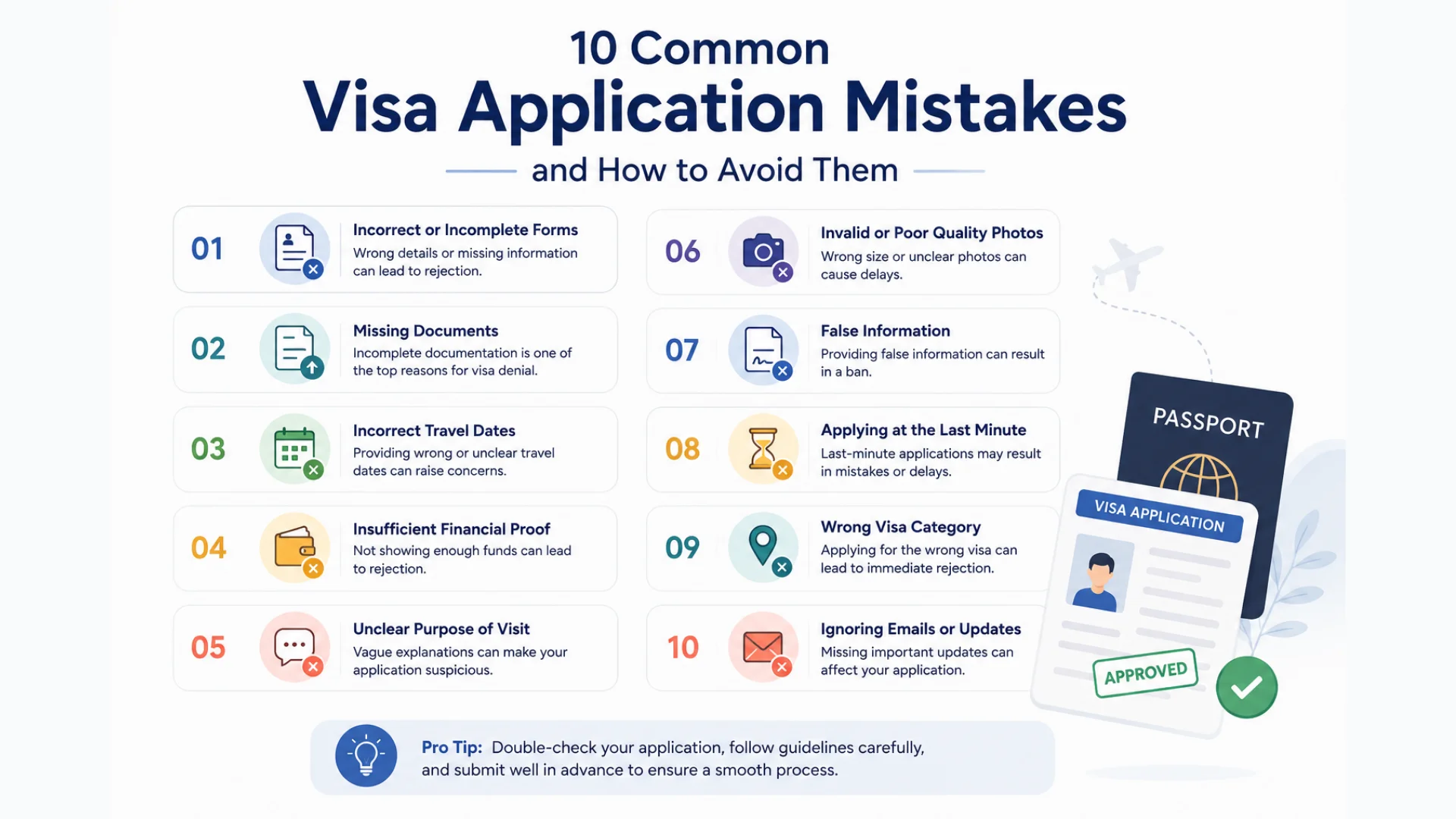
Applying for a visa can be a complex, detail-heavy process, and even small errors can lead to delays, additional scrutiny, or outright rejection. Every year, countless applicants lose valuable time and money simply because they overlooked a requirement, submitted incomplete paperwork, or misunderstood the process. The good news is that most visa mistakes are entirely avoidable with careful planning and attention to detail. In this post, we’ve grouped ten of the most common visa application mistakes into four key categories, along with practical guidance on how to avoid them, so you can submit a strong, error-free application and move confidently toward your study or career goals abroad.
1. Documentation and Paperwork Errors
A large percentage of visa rejections stem from simple documentation issues. This includes submitting incomplete forms, missing signatures, providing outdated documents, or failing to include required supporting evidence like bank statements, offer letters, or academic transcripts. Another frequent mistake is submitting documents that don’t meet formatting requirements, such as incorrect photo specifications or untranslated foreign-language paperwork. Applicants also sometimes overlook expiration dates on passports or certificates, submitting documents that will no longer be valid by the time processing is complete. To avoid these issues, create a detailed checklist based on the official visa requirements, double-check every document before submission, and keep both digital and physical copies organized. When in doubt, review the embassy or consulate’s official guidelines rather than relying on secondhand information from forums or social media.
2. Financial and Eligibility Misunderstandings
Many applicants underestimate the financial proof required to demonstrate they can support themselves during their studies or employment abroad. Common mistakes include showing insufficient funds, using financial documents that are too old, or failing to show a clear, traceable source of income or savings. Others mistakenly assume they meet eligibility criteria without carefully reviewing age limits, educational qualifications, or work experience thresholds specific to their visa category. Some applicants also underestimate processing fees or forget to account for additional costs like health insurance or biometric appointments. To avoid these pitfalls, review the exact financial thresholds required for your specific visa type, ensure your documents are recent and well-organized, and consult official sources or a visa professional to confirm your eligibility before applying, rather than assuming you qualify based on general research alone.
3. Weak or Inconsistent Applications
Inconsistencies between different parts of an application are a major red flag for visa officers. This includes discrepancies between your stated purpose of travel and your supporting documents, mismatched personal information across forms, or vague answers during interviews that don’t align with your written application. Some applicants also submit generic personal statements or cover letters that fail to clearly articulate their intentions, whether that’s completing a specific program or filling a particular job role. Weak ties to your home country, such as no clear plans to return after your studies or contract, can also raise concerns for certain visa types. To avoid this, ensure every part of your application tells a consistent, honest story, be specific about your goals and plans, and prepare thoroughly for any interview by reviewing your entire application beforehand.
4. Timing and Process Mistakes
Poor timing is another major source of avoidable visa problems. Many applicants apply too close to their intended travel or program start date, leaving no buffer for processing delays, additional document requests, or unexpected complications. Others fail to track application status or missed deadlines for supplementary submissions, resulting in automatic rejections. A common oversight is not booking required appointments, such as biometrics or medical exams, early enough to meet processing timelines. Some applicants also submit their application without first understanding the full multi-step process specific to their visa type. To avoid these mistakes, start your application well in advance of your intended departure date, create a timeline with all key deadlines, and regularly check your application status through official channels. Building in extra time for the unexpected can make the difference between a smooth approval and a stressful, last-minute scramble.