
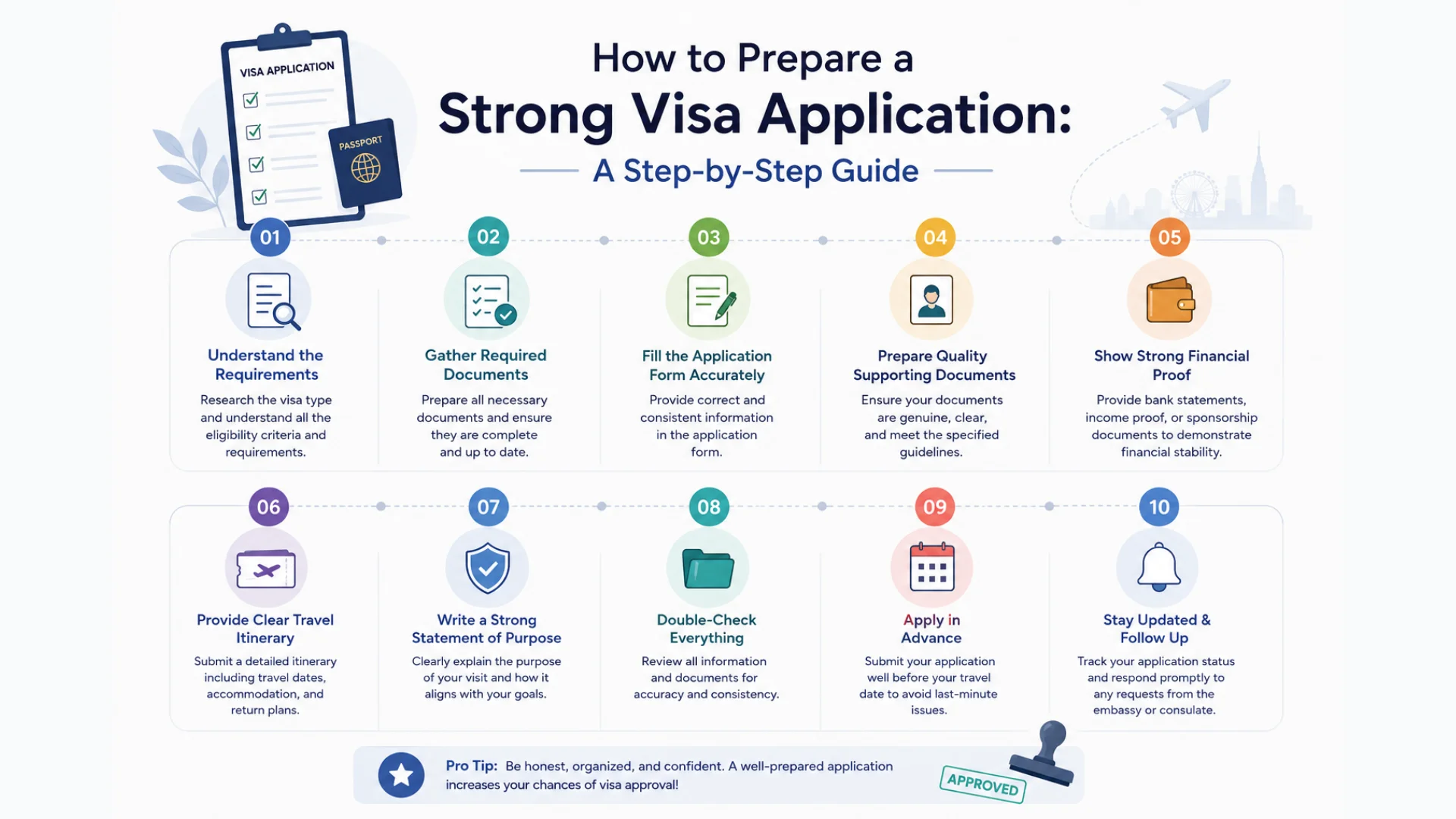
A strong visa application isn’t just about filling out forms correctly; it’s about presenting a clear, credible, and well-supported case for why you should be granted entry to study or work in another country. Visa officers review thousands of applications, and the ones that stand out for the right reasons are organized, consistent, and backed by solid documentation. Whether you’re applying for a student visa or a work visa, the preparation process follows a similar logical structure. This step-by-step guide breaks the process down into four essential stages, helping you approach your application with clarity and confidence instead of last-minute stress.
1. Research Requirements and Build a Documentation Checklist
The foundation of a strong visa application is thorough research. Every country and visa category has its own specific requirements, so start by reviewing official government or embassy resources rather than relying on generic advice. Identify exactly what documents you’ll need, such as passports, acceptance letters, job offers, financial statements, language test scores, and health insurance proof. Once you know what’s required, build a detailed checklist and set realistic deadlines for gathering each item, since some documents, like police clearance certificates or medical exams, can take weeks to obtain. This stage also involves confirming your eligibility based on age, education, or work experience thresholds. Taking the time to fully understand the requirements upfront prevents last-minute scrambling and significantly reduces the risk of submitting an incomplete or non-compliant application.
2. Organize and Verify Your Supporting Documents
Once you’ve gathered your documents, the next step is to organize and verify them carefully. Check that passports and certificates are valid well beyond your intended travel dates, and ensure financial documents are recent and clearly show a traceable source of funds. If any documents are in a different language, arrange for certified translations, and make sure photos meet the exact specifications required. It’s helpful to create both digital and physical copies of everything, organized in the order requested by the application checklist, so nothing is missing at submission time. This is also the stage to double-check that all information is consistent across every document, since even small discrepancies in names, dates, or figures can raise red flags. A well-organized, verified document set signals professionalism and preparedness to the reviewing officer.
3. Write a Clear and Honest Personal Statement
Many visa applications require a personal statement, cover letter, or statement of purpose, and this is your opportunity to clearly explain your intentions. Avoid generic templates; instead, be specific about your academic or career goals, why you’ve chosen this particular program or job, and how it fits into your long-term plans. If applicable, explain your ties to your home country, such as family, property, or career prospects, to demonstrate that your intentions align with the visa’s conditions. Keep your tone honest, confident, and focused, avoiding exaggeration or vague claims that can’t be backed up by your supporting documents. A well-written personal statement that aligns seamlessly with the rest of your application helps build a credible, cohesive narrative that reassures the visa officer of your genuine intentions.
4. Review, Submit, and Prepare for Follow-Up Steps
Before submitting your application, review everything one final time, checking for consistency, completeness, and accuracy across every form and document. It can help to have someone else review your application as well, since a fresh set of eyes often catches errors you might miss. Once submitted, keep track of your application status through official channels and respond promptly to any requests for additional information. If an interview is required, prepare thoroughly by reviewing your entire application and practicing clear, honest answers to likely questions. Also plan ahead for follow-up steps like biometric appointments or medical exams, scheduling them as early as possible. This final stage of careful review and proactive follow-through is often what separates a smooth approval from unnecessary delays or complications.