
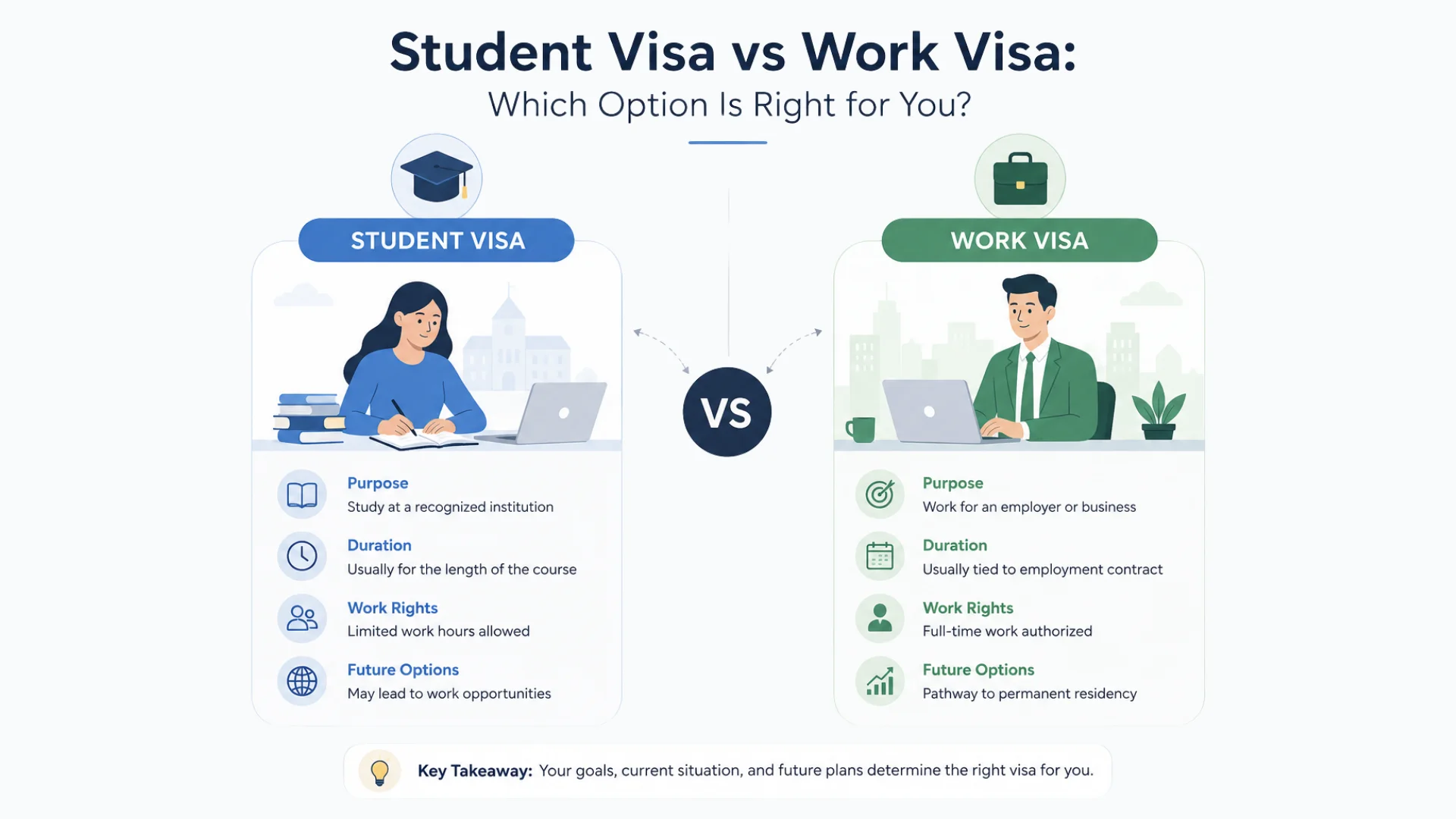
Deciding between a student visa and a work visa is a crucial step for anyone planning to move abroad for education or career purposes. While both pathways can eventually lead to similar long-term outcomes, such as international experience, higher earning potential, or even permanent residency, the journey, requirements, and benefits of each are quite different. Choosing the wrong option can cost you valuable time and money, or limit opportunities you didn’t realize you were giving up. This blog breaks down four important considerations to help you understand the key differences between student and work visas, so you can make a confident, well-informed decision based on your unique goals.
1. Understanding the Core Purpose of Each Visa
A student visa is designed specifically for individuals enrolled in an accredited academic program, whether that’s a degree, diploma, or certificate course. Its primary purpose is education, and while many student visas allow limited part-time work, the visa itself does not authorize full-time employment. A work visa, in contrast, is tied directly to employment and typically requires a valid job offer or sponsorship from an employer in the host country. It authorizes you to work full-time and is often granted based on your skills, qualifications, or the demand for your profession. Understanding this fundamental difference is the first step in choosing correctly: if your immediate goal is to gain a formal qualification, a student visa fits; if you already have a job offer or in-demand skills, a work visa may be the faster route.
2. Comparing Eligibility Requirements
Eligibility for a student visa generally centers around acceptance into a recognized institution, proof of financial means to support your studies and living expenses, and sometimes language proficiency test scores. Work visas, on the other hand, usually require a confirmed job offer, relevant work experience, and sometimes a labor market assessment to prove that no local candidate is available for the role. Some countries also use points-based systems for work visas, evaluating candidates on education, experience, age, and language skills. Because the criteria are so different, your current qualifications and circumstances often determine which visa is realistically accessible to you. Someone with a strong academic background but limited work experience may find a student visa easier to secure, while an experienced professional with a job offer in hand may qualify directly for a work visa.
3. Evaluating Costs, Duration, and Flexibility
Student visas often come with tuition fees, living expenses, and health insurance costs, but they usually offer a longer duration tied to your program length, along with flexibility to explore part-time work or internships. Work visas typically involve costs related to sponsorship, application fees, and sometimes relocation, but they provide the advantage of immediate income and full-time employment from day one. Duration also varies significantly: student visas are generally valid for the length of your course, while work visas are often tied to your employment contract and may require renewal or employer sponsorship to extend. If financial stability and immediate income are priorities, a work visa may be more practical. If you’re prepared to invest in your education first with an eye toward future opportunities, a student visa could be the better long-term investment.
4. Aligning the Visa With Your Long-Term Career Goals
Ultimately, the right choice depends on where you see yourself in the coming years. If you’re early in your career or looking to build foundational qualifications, a student visa followed by a post-study work permit can be an excellent stepping stone, allowing you to gain local experience and improve your job prospects before committing to a work visa. If you already possess in-demand skills and a job offer, a work visa allows you to skip the education phase and start building your career and residency status immediately. Some countries even offer clear pathways connecting both visa types to permanent residency, so it’s worth researching how each option fits into your broader immigration strategy before making a final decision.