
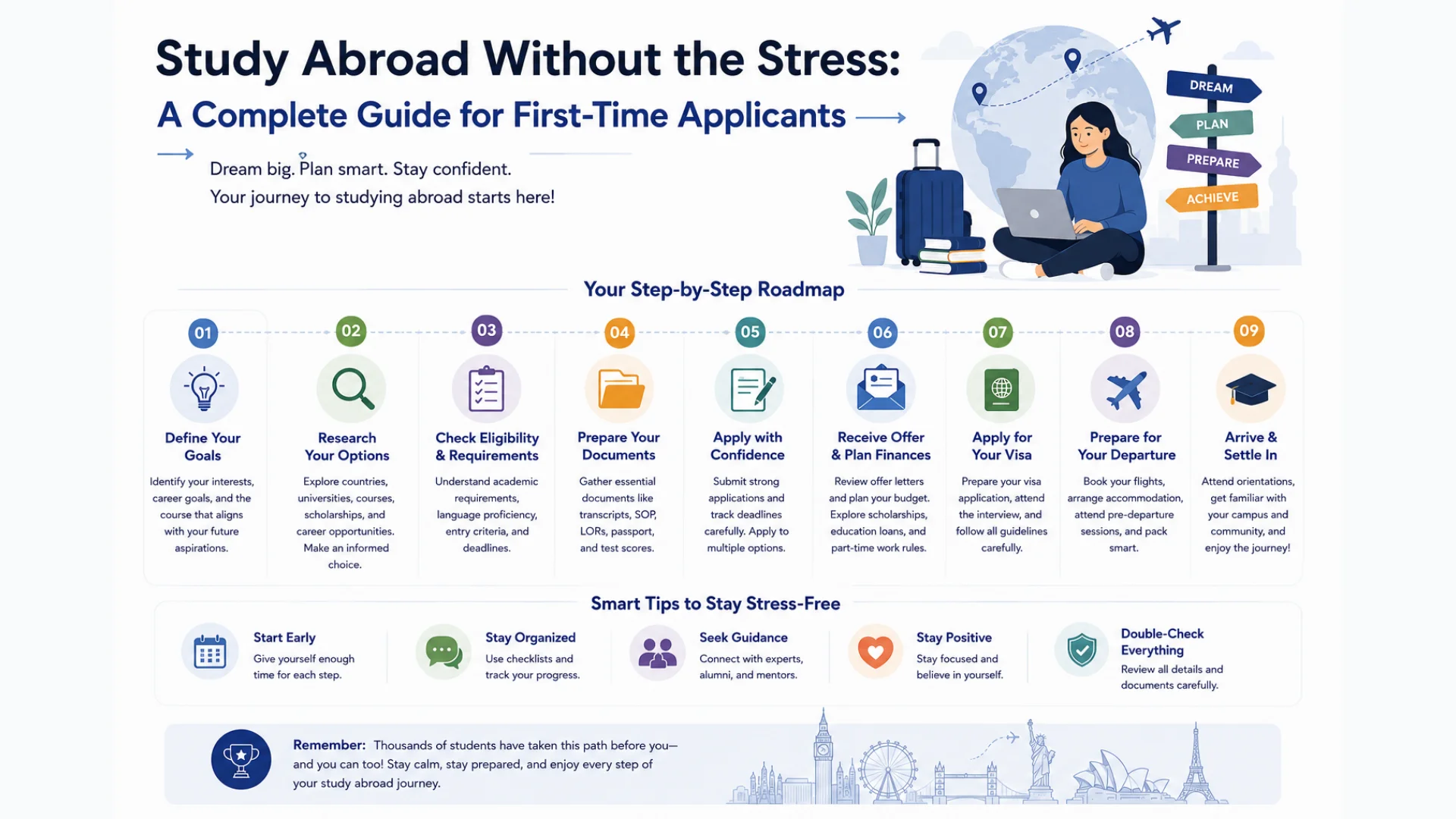
Studying abroad for the first time is an exciting milestone, but it can also feel overwhelming when you’re navigating applications, visas, finances, and logistics all at once. Between choosing the right country, meeting deadlines, and preparing paperwork, it’s easy for first-time applicants to feel lost or anxious about missing something important. The good news is that with the right planning and a clear roadmap, the entire process becomes far more manageable. This guide walks you through four essential stages of preparing for study abroad, so you can approach the journey with confidence instead of stress, and focus on the excitement of what’s ahead.
1. Start Early and Build a Realistic Timeline
One of the biggest sources of stress for first-time applicants is leaving things until the last minute. University applications, visa processing, and document collection all take time, and rushing increases the risk of mistakes or missed deadlines. Begin by researching your target countries and universities at least 8 to 12 months before your intended start date, giving yourself enough time for entrance exams, application submissions, and visa processing. Create a simple timeline that maps out key milestones, such as application deadlines, standardized test dates, and financial document preparation. Building in buffer time for unexpected delays, like slow document processing or additional document requests, can make a significant difference. Starting early doesn’t just reduce stress; it also gives you more time to make thoughtful, well-researched decisions rather than rushed ones.
2. Understand the Application and Admission Process
For first-time applicants, the university admission process can feel confusing, especially when requirements vary across institutions and countries. Start by thoroughly researching each university’s specific requirements, including academic transcripts, standardized test scores, letters of recommendation, and personal statements. Pay close attention to application deadlines, since many universities have different timelines for international students compared to domestic applicants. It’s also helpful to reach out directly to admissions offices if you have questions, rather than relying solely on general information found online. Keep track of login credentials, application portals, and confirmation emails in one organized place. Once you receive an offer, carefully review any conditions attached to it, such as required test scores or document submissions, and respond to deadlines promptly to secure your spot before moving on to the visa stage.
3. Prepare Your Finances and Visa Documentation
Financial planning is a critical part of studying abroad, and starting early here reduces significant stress later. Research the full cost of your program, including tuition, living expenses, health insurance, and any hidden fees, and explore scholarships, grants, or education loans well in advance. Once you have a clear financial picture, begin gathering the documents required for your student visa application, such as bank statements, sponsorship letters, and proof of acceptance. Because visa requirements can be detailed and country-specific, create a checklist based on official embassy guidelines and start collecting documents as early as possible, since some, like police clearance certificates, can take weeks to obtain. Staying organized and proactive during this stage prevents the common last-minute panic that many first-time applicants experience closer to their departure date.
4. Plan for Arrival and Settling In
Once your visa is approved, there’s still important preparation ahead of your departure. Arrange accommodation in advance, whether through university housing or private rentals, and research the local area to understand transportation, banking, and basic living logistics. Make copies of all your important documents, both digital and physical, and keep them easily accessible during travel. It’s also worth connecting with your university’s international student office or student groups beforehand, as they often provide orientation programs, airport pickup services, and support networks that ease the transition. Packing appropriately for the local climate and understanding basic cultural norms can also help you settle in more comfortably. Taking these final steps seriously ensures that once you land, you can focus on adjusting to your new environment and starting your studies with confidence, rather than scrambling to handle logistics you could have planned for earlier.
How The Pathfinder Visa Can Help
Studying abroad for the first time doesn’t have to be an overwhelming, stressful experience, especially with the right guidance by your side. The Pathfinder Visa specializes in supporting first-time applicants through every stage of their study abroad journey, from choosing the right country and program to preparing a strong visa application. Our experienced consultants help you build a realistic timeline, understand complex admission and visa requirements, and gather the correct documentation without confusion or guesswork. We also assist with financial planning guidance, statement of purpose writing, and interview preparation, ensuring your application is strong and complete the first time around. Beyond the application process, our team can help you understand what to expect before departure, so you feel prepared and confident rather than anxious. With The Pathfinder Visa as your trusted partner, you don’t have to navigate the complexities of studying abroad alone. Reach out to us today, and let us help make your first study abroad experience a smooth and successful one.