
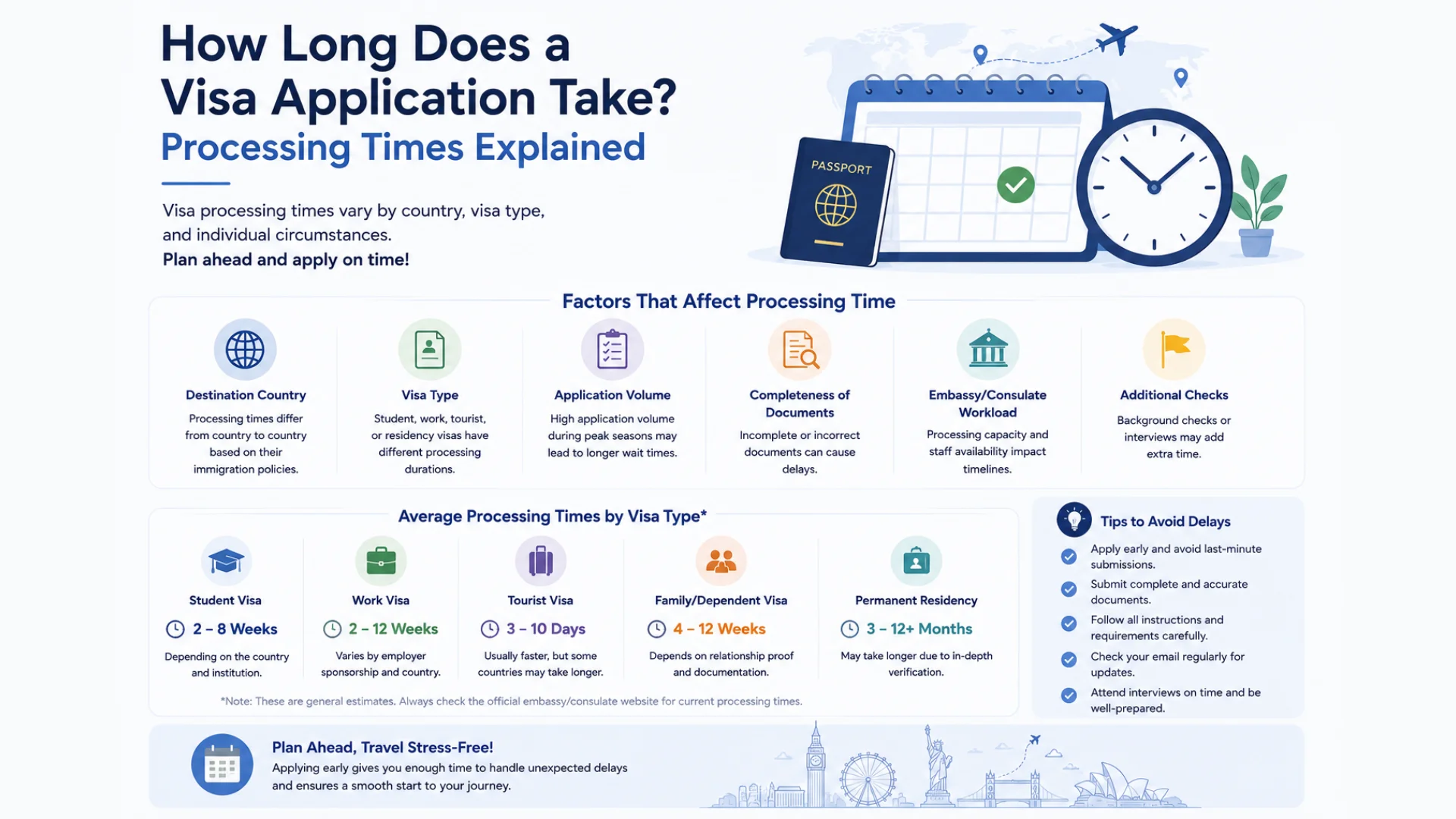
One of the most common questions applicants ask is, “How long will my visa take?” Unfortunately, there’s no single answer, since processing times depend on the type of visa, the country you’re applying to, the time of year, and how complete your application is. Not knowing what to expect can make the waiting period feel stressful, especially when you have travel dates, program start dates, or job start dates to plan around. In this guide, we break down four key factors that influence visa processing times, so you can set realistic expectations and plan your timeline more effectively.
1. Visa Type and Category Matter
Different visa categories often have vastly different processing timelines. Student visas, for example, can take anywhere from a few weeks to a couple of months, depending on the country and the volume of applications during peak admission seasons. Work visas often take longer, especially those requiring employer sponsorship, labor market assessments, or additional government approvals, sometimes stretching to several months. Tourist or short-term visas are typically processed faster, often within a few days to a few weeks, since they generally involve less documentation. Points-based immigration visas or permanent residency applications can take the longest, sometimes over a year, due to the complexity of eligibility assessments. Understanding the typical timeline for your specific visa category helps you plan realistically instead of assuming all visas follow the same process.
2. Country-Specific Processing Times
Every country has its own visa processing system, staffing levels, and administrative procedures, which directly affects how long applications take. Some countries have streamlined, largely digital processes with clear published timelines, while others involve more manual review, additional verification steps, or in-person interviews that extend processing times. Embassies and consulates in high-demand countries or cities often experience longer wait times simply due to application volume. It’s important to check the official, current processing time estimates published by the specific embassy or consulate you’re applying through, rather than relying on general assumptions or outdated information from other applicants’ experiences. Processing times can also change due to policy updates or diplomatic relations between countries, so checking official sources close to your application date gives you the most accurate picture.
3. Seasonal Demand and Application Volume
Visa processing times often fluctuate based on seasonal demand. For student visas, application volume spikes significantly in the months leading up to major academic intake periods, such as late summer for fall semester starts, which can slow down processing due to sheer volume. Similarly, tourist visa applications often surge around major holidays or peak travel seasons. If you’re applying during a high-demand period, it’s wise to submit your application as early as possible to avoid delays caused by backlog. Some countries also experience slower processing during public holidays or administrative transitions, such as fiscal year-end periods. Being aware of these seasonal patterns and building extra buffer time into your application timeline can help you avoid unnecessary stress if processing takes longer than the average published estimate.
4. Application Completeness and Additional Requirements
Even within the same visa category and country, processing times can vary significantly based on how complete and accurate your application is. Missing documents, inconsistent information, or unclear financial proof often trigger requests for additional information, which can add weeks or even months to your processing time. Some applications may also require additional steps like interviews, medical examinations, or background checks, each of which adds time to the overall process. Submitting a thorough, well-organized application the first time significantly reduces the risk of delays caused by follow-up requests. It’s also worth tracking your application status through official channels once submitted, and responding promptly to any requests for additional documentation, since delayed responses on your end can further extend processing times beyond the standard estimate.
How The Pathfinder Visa Can Help
Uncertainty around visa processing times can make planning your study or career move abroad stressful, especially when deadlines are involved. The Pathfinder Visa helps take the guesswork out of the process by giving you accurate, up-to-date information on processing timelines specific to your visa category and destination country. Our experienced consultants help you prepare a complete, error-free application from the start, significantly reducing the risk of delays caused by missing documents or follow-up requests. We also help you plan your application timeline strategically, factoring in seasonal demand and country-specific processing patterns, so you can align your visa application with your intended travel, study, or work start date. If delays or additional requirements do come up, our team provides ongoing support to help you respond quickly and correctly. With The Pathfinder Visa managing the details, you can plan your move abroad with clarity and confidence instead of uncertainty. Contact us today to get a realistic timeline tailored to your specific situation.