
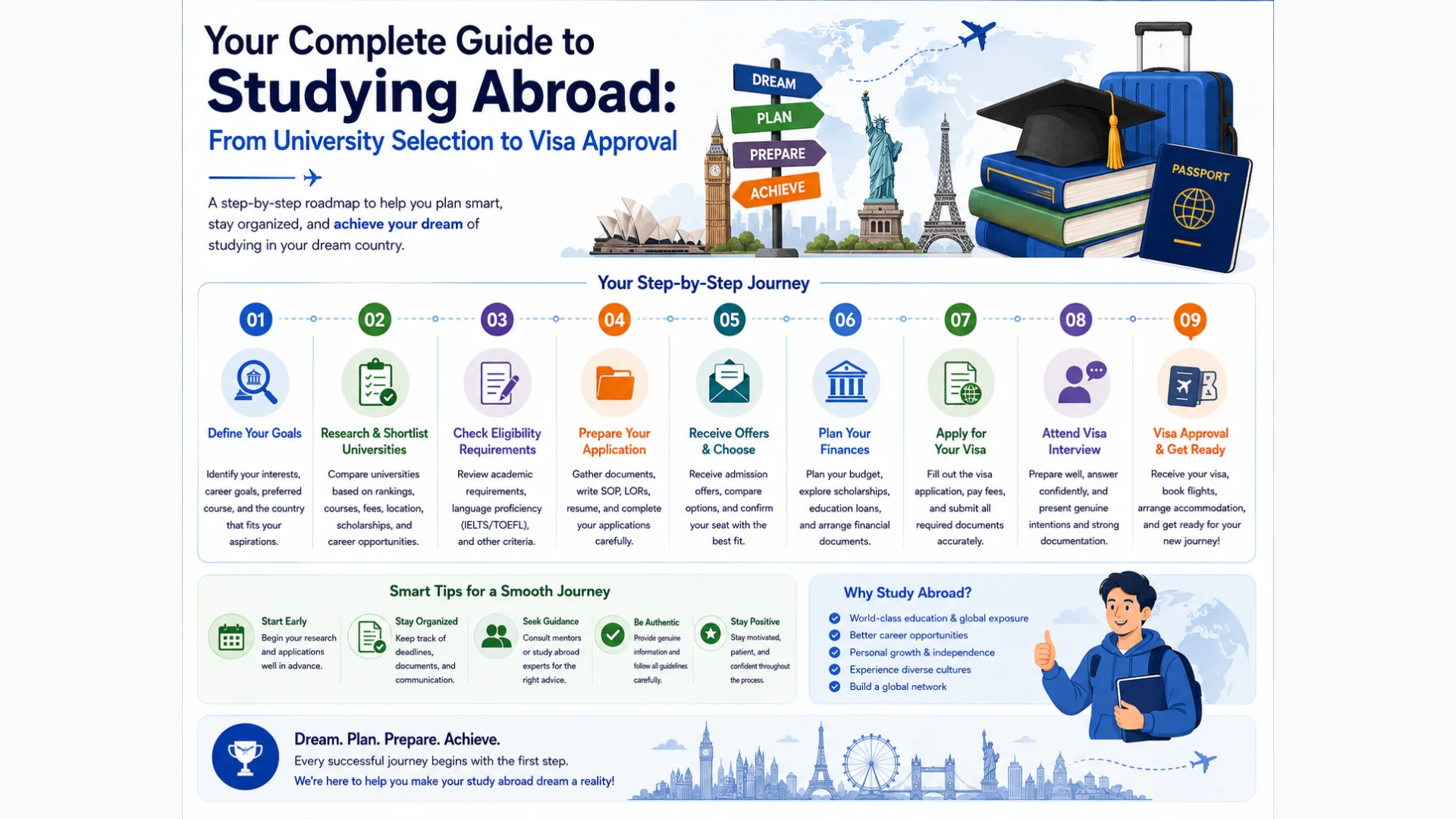
Studying abroad is one of the most transformative decisions a student can make, opening doors to world-class education, global career opportunities, and life-changing personal growth. But the journey from deciding to study abroad to actually landing in your new country involves many interconnected steps, and skipping or rushing any one of them can create unnecessary setbacks. This complete guide walks you through the entire process from start to finish, covering everything from choosing the right university to securing your visa approval, so you have a clear roadmap for every stage of your study abroad journey.
1. Defining Your Goals and Choosing the Right Country
Before diving into university research, it’s important to get clear on why you want to study abroad and what you hope to gain from the experience. Are you looking for a specific academic specialization unavailable at home, international work experience, exposure to a new culture, or a pathway toward long-term migration? Your answer will shape which countries and programs make the most sense for you. Popular study destinations like the United States, Canada, the United Kingdom, Australia, and Germany each offer distinct advantages, from research opportunities and post-study work rights to cost of living and cultural fit. Consider factors like language of instruction, climate, safety, and the size of the international student community. Narrowing down your goals early prevents wasted time researching countries or programs that don’t actually align with what you’re hoping to achieve.
2. Researching and Selecting the Right University and Program
Once you’ve identified a shortlist of countries, the next step is researching specific universities and programs. Look beyond general rankings and focus on program-specific reputation, faculty expertise, curriculum structure, and opportunities for research, internships, or industry partnerships in your field. Check whether the degree is internationally recognized and valued by employers, particularly if you plan to return home or work in a third country after graduation. Reach out to admissions offices, current students, or alumni to get honest insights beyond marketing materials. It’s also wise to apply to a balanced mix of universities, including a few ambitious choices, some solid matches, and a couple of safer backup options, to maximize your chances of admission while still aiming high. Carefully review each university’s specific application requirements and deadlines, since international student timelines often differ from domestic ones.
3. Preparing a Strong Application
A compelling university application goes beyond good grades. Most institutions will ask for academic transcripts, standardized test scores such as the SAT, GRE, or GMAT depending on your program, language proficiency scores like IELTS or TOEFL, letters of recommendation, and a personal statement or essay. Give yourself ample time to prepare for and take any required exams, since retakes may be necessary if your first scores don’t meet target requirements. Your personal statement should tell a genuine, specific story about your academic interests, relevant experiences, and future goals, rather than generic statements that could apply to any applicant. Request recommendation letters well in advance from professors or employers who know your work well and can speak to your strengths in detail. Submitting a complete, thoughtful application well before deadlines gives admissions committees the best impression of your genuine interest and preparedness.
4. Planning Your Finances and Exploring Funding Options
Studying abroad is a significant financial commitment, so early financial planning is essential. Calculate the full cost of your intended program, including tuition, housing, health insurance, travel, and daily living expenses, and compare this against your available resources. Research scholarships, grants, assistantships, and education loans specific to international students, as many universities and even some governments offer substantial financial support for talented applicants. If you’ll be relying on family support, start organizing the necessary financial documentation early, since visa applications typically require clear, traceable proof of funds. Understanding your full financial picture early also helps you make realistic decisions about which universities and countries are truly viable for you, and prevents financial stress from derailing your plans partway through the process.
5. Understanding and Applying for Your Student Visa
Once you’ve received and accepted an offer of admission, the visa application process begins. Research the specific student visa requirements for your destination country well in advance, since requirements and processing times vary significantly. Common requirements include your letter of acceptance, proof of financial support, academic transcripts, language test scores, health insurance, and sometimes a medical examination or police clearance certificate. Prepare a clear, honest statement of purpose explaining your academic goals and how this specific program fits into your future plans. Submit your application as early as possible to account for processing times and avoid last-minute stress, particularly during peak intake seasons when embassies experience higher application volumes. If an interview is required, prepare thoroughly by reviewing your entire application and practicing clear, consistent answers to likely questions.
6. Preparing for Departure and Arrival
With your visa approved, there are still important steps before you depart. Arrange accommodation, whether through university housing, private rentals, or homestay programs, and research your new city’s transportation, banking, and healthcare systems in advance. Make both digital and physical copies of all important documents, including your passport, visa, acceptance letter, and financial records, and keep them easily accessible while traveling. Many universities offer orientation programs, airport pickup services, and international student support networks, so reach out to your university’s international office ahead of time to take advantage of these resources. Pack appropriately for the local climate and take time to learn basic cultural norms and etiquette for your new country. Thoughtful preparation at this final stage helps ensure a smoother transition, allowing you to focus on settling in and starting your studies with confidence rather than scrambling with last-minute logistics.
How The Pathfinder Visa Can Help
Navigating the entire study abroad journey, from choosing the right university to securing visa approval, can feel like a lot to manage on your own, especially when each stage comes with its own requirements and deadlines. The Pathfinder Visa is here to guide you through every step with expert, personalized support. Our experienced consultants help you shortlist the right countries and universities based on your specific goals, assist with building strong applications and statements of purpose, and provide clear, accurate guidance on financial planning and documentation. When it comes to your student visa, we stay current with the latest embassy requirements across multiple countries, helping you prepare a complete, error-free application and confidently handle interview preparation. We also offer pre-departure guidance to help you feel fully prepared before you leave. With The Pathfinder Visa as your partner throughout this journey, you don’t have to navigate the complexities of studying abroad alone, from your very first research steps all the way through to visa approval and beyond. Reach out to us today to start your study abroad journey with expert support by your side.