
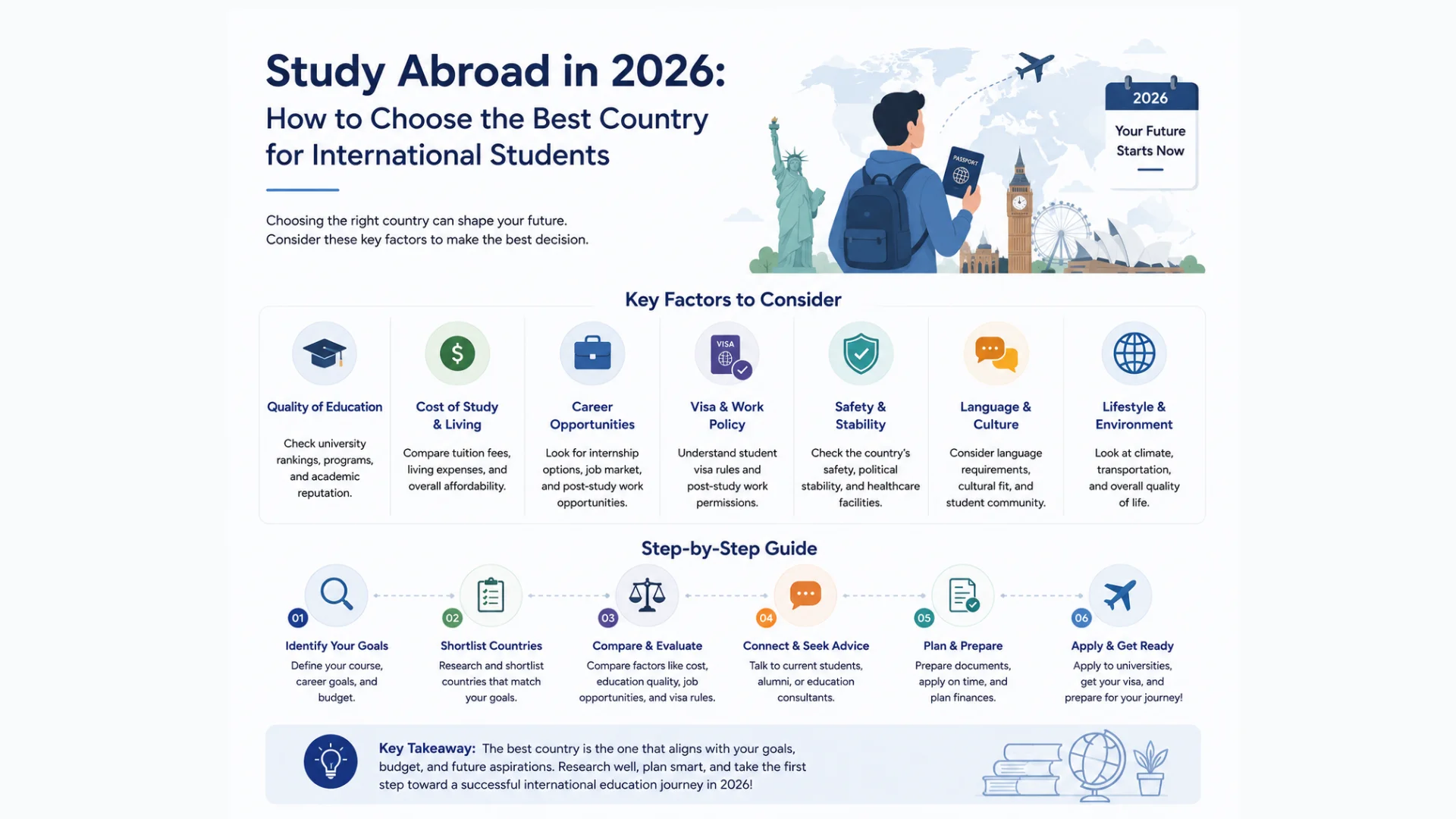
Choosing where to study abroad is one of the biggest decisions an international student will make, and in 2026, the options are more diverse than ever. From evolving visa policies to shifting job markets and rising education costs, students today need to look beyond rankings and reputation alone. The “best” country isn’t universal; it depends on your field of study, budget, career goals, and lifestyle preferences. This guide breaks down four key factors to help you evaluate your options thoughtfully, so you can choose a study destination that truly sets you up for academic success and long-term career growth.
1. Evaluate Academic Quality and Program Fit
Start by looking beyond general university rankings and focus on how well a program aligns with your specific field of study and career aspirations. Some countries excel in particular disciplines, such as engineering, business, or healthcare, and have institutions with strong industry connections in those areas. Research faculty expertise, curriculum structure, available specializations, and opportunities for research or hands-on learning like internships and co-op programs. It’s also worth checking whether the degree is internationally recognized and respected by employers in your home country or wherever you plan to build your career. Reading reviews from current students and alumni, and reaching out to program coordinators with questions, can give you a clearer picture than rankings alone. Choosing a program that truly fits your academic and professional goals matters more than chasing prestige.
2. Compare Costs and Financial Support Options
Tuition fees, living costs, and currency exchange rates vary dramatically between countries, so it’s important to build a realistic budget before deciding. Some countries offer significantly lower tuition or even free education at public universities, while others come with higher costs but stronger scholarship and financial aid opportunities for international students. Beyond tuition, factor in housing, health insurance, transportation, and daily living expenses, which can differ widely even within the same country depending on the city. Research available scholarships, grants, part-time work rights for students, and whether your chosen country allows spouses or dependents to work or study alongside you. A country that seems expensive at first glance might offer more financial support or better part-time earning potential, ultimately making it more affordable than a seemingly cheaper alternative.
3. Assess Visa Policies and Post-Study Work Opportunities
Visa policies can make or break your study abroad experience, especially if you plan to work after graduation. In 2026, many countries are adjusting their immigration policies to attract or restrict international talent, so it’s essential to check current rules rather than relying on outdated information. Look into how long you can stay and work after completing your degree, whether there’s a clear pathway to permanent residency, and how straightforward the visa renewal process is. Some countries offer generous post-study work visas that allow graduates to gain valuable local experience, while others have stricter limits or more complex sponsorship requirements. Understanding these policies in advance helps you choose a destination that not only offers a good education but also supports your long-term career and immigration goals after graduation.
4. Consider Lifestyle, Safety, and Career Opportunities
Beyond academics and visas, your day-to-day experience matters just as much. Consider factors like climate, language, cultural fit, safety, and the overall quality of life in your prospective country. Research the local job market in your field, since strong post-graduation employment prospects can significantly influence your long-term success. It’s also worth looking into the size and support of the international student community, as this can ease the transition into a new culture and provide a valuable support network. Healthcare quality, public transportation, and general cost of living all contribute to your overall wellbeing while studying abroad. Ultimately, the best country for you is one where you can thrive academically, adjust comfortably to daily life, and build meaningful career opportunities well beyond graduation.