
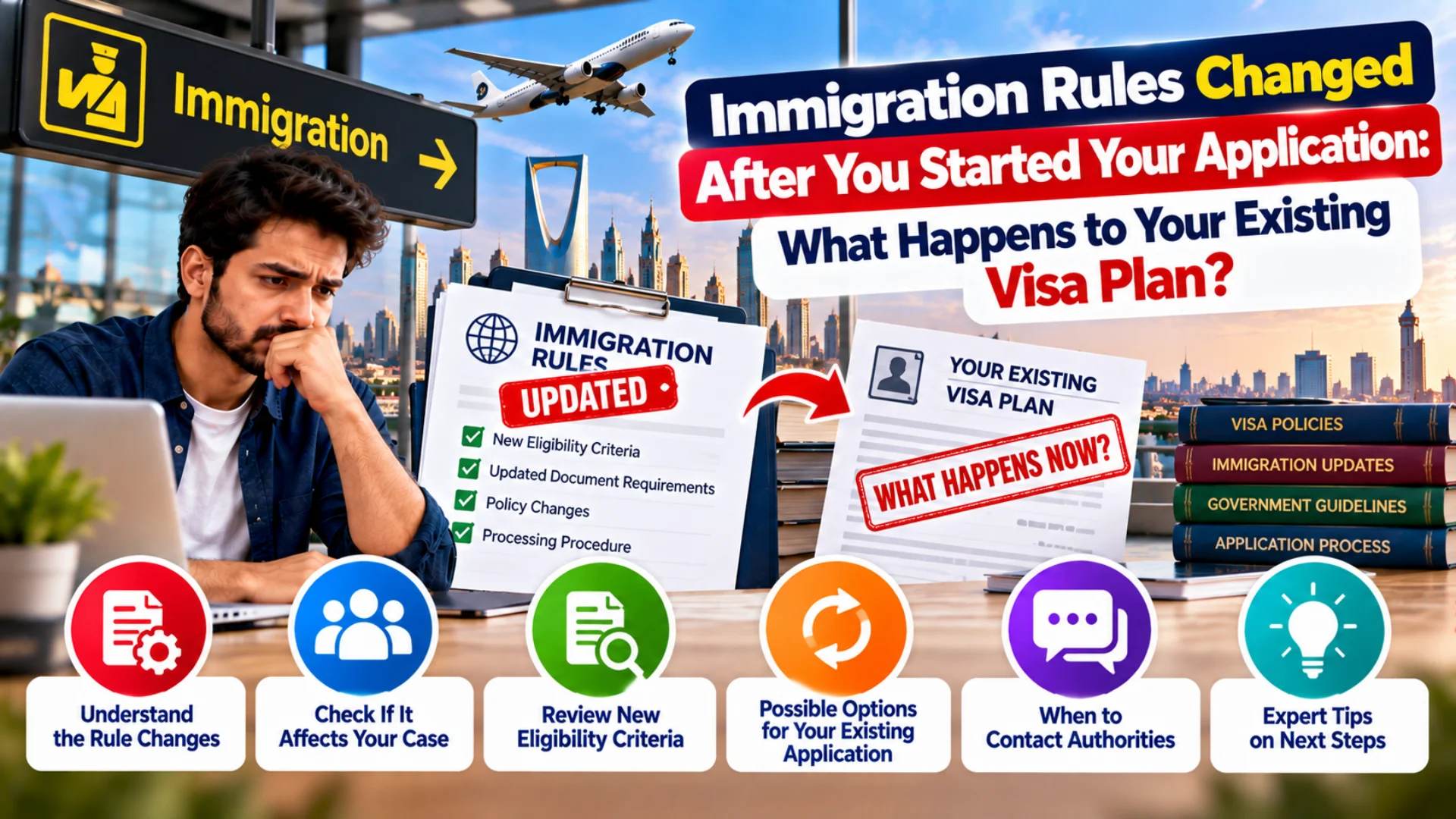
Immigration rules can change while an application is already in progress. This can leave applicants wondering:
“I started my visa application under the old rules. Will the new rules affect me?”
The answer depends on what changed, when the change took effect, and what stage your application has reached.
There is no universal rule that protects every application from future immigration changes. Some applications may continue under the rules that applied when they were submitted, while others can be affected by new requirements.
If you are applying from Saudi Arabia, UAE, Bahrain, Qatar, Kuwait, Oman or India, understanding the difference between a submitted application and an application that is still being prepared is especially important.
1. Check Whether Your Application Has Actually Been Submitted
One of the first things to establish is whether you have only started preparing your application or whether you have officially submitted it to the immigration authority.
There is a major difference between:
- Planning to apply
- Creating an online profile
- Receiving an invitation
- Completing forms
- Paying fees
- Submitting the application
- Receiving an acknowledgement or confirmation
- Having the application approved
A rule change may affect these stages differently.
For example, simply creating an immigration profile does not necessarily mean you have a protected application under the previous rules.
2. Check the Effective Date of the New Rule
When an immigration authority announces a new policy, look carefully at the effective date.
The announcement date and implementation date may not always be the same.
The official instructions may specify that the new rule applies to:
- Applications submitted on or after a particular date
- Applications received after a particular date
- New applicants only
- Applications that have not yet reached a specific stage
- Both new and existing applications
This is why relying on an old blog post, social media post or information from another applicant can be risky.
3. Your Existing Application May Not Automatically Be Cancelled
A change in immigration rules does not necessarily mean that every application already submitted will be cancelled.
Depending on the immigration program and the specific policy, existing applications may continue under transitional arrangements or according to the rules that applied when the application was submitted.
However, this should not be assumed.
The relevant immigration authority’s official instructions should be checked to determine whether the new rule applies to applications already in processing.
4. An Invitation Does Not Always Mean Your Requirements Are Permanently Locked
This is particularly important for applicants using points-based immigration systems such as Canada’s Express Entry.
Receiving an invitation does not mean that every subsequent eligibility requirement can be ignored.
Applicants still need to submit a complete application and satisfy the applicable requirements.
If something changes before submission, such as a language test result expiring or your personal circumstances changing, it may affect your application.
For this reason, applicants should review their eligibility again before submitting the final application.
5. Your Visa Strategy May Need to Change
Sometimes a new immigration rule does not cancel an existing application but can make the original long-term plan less suitable.
For example, a country might change:
- Minimum salary requirements
- Occupation lists
- Points requirements
- Financial requirements
- Language requirements
- Age requirements
- Work experience rules
- Family sponsorship rules
- Visa validity periods
- Provincial or regional eligibility
- Processing procedures
If the original pathway becomes unavailable, applicants may need to consider another visa category or immigration program.
6. Check Transitional or Grandfathering Provisions
Some immigration reforms include transitional provisions.
These provisions can explain how the new rules apply to people who started the process before the change.
For example, the rules may state that:
- Existing applications continue under previous requirements
- Applications submitted before a particular date are exempt
- Only new applications are affected
- Existing applicants have additional time to meet a new requirement
- Certain applicants are moved into a different process
Never assume that a transition rule applies to you without checking the actual wording.
7. Keep Your Documents Updated
Even when your application was submitted under older rules, you may still need to provide updated documents during processing.
Depending on the immigration program, this could include:
- Passport
- Police clearance certificate
- Medical examination
- Proof of funds
- Employment documents
- Marriage or birth certificates
- Language test results
- Biometrics
- Additional information requested by the immigration authority
An applicant should respond to requests within the specified deadline.
What If the New Rules Make You Ineligible?
If a rule change affects your eligibility, do not immediately withdraw your application.
First determine:
- Whether the new rule actually applies to your application.
- Whether transitional provisions protect your application.
- Whether the immigration authority has issued specific instructions for existing applicants.
- Whether you can continue under your current pathway.
- Whether another visa or immigration pathway is available.
In complicated cases, getting advice from a qualified immigration professional before withdrawing or changing an application can be important.
What Happens If Your Application Is Refused Because of a Rule Change?
If an application is refused, the next step depends on the reason for refusal and the immigration system involved.
Possible options can include:
- Correcting the issue and submitting a new application
- Applying through another immigration pathway
- Requesting reconsideration where available
- Appealing, if an appeal right exists
- Seeking judicial review in jurisdictions where it is applicable
The appropriate option depends on the specific country, visa category and decision.
Final Thoughts
Immigration policies are not permanent. Governments regularly change visa requirements, eligibility criteria, occupation lists, financial requirements and application procedures.
If the rules change after you start your application, do not assume that your existing visa plan is automatically cancelled or automatically protected.
The key questions are:
When did you submit the application?
When did the new rule take effect?
Does the new rule apply to existing applications?
Are there transitional provisions?
Have your personal circumstances changed?
Getting these questions answered can help you determine whether you should continue with your current application, update your documents or consider another immigration pathway.
For applicants from Saudi Arabia and the wider Gulf region, keeping track of official immigration updates is especially important because visa rules can change while applications are being prepared or processed.
Frequently Asked Questions
Can immigration rules change after I submit my application?
Yes. Immigration authorities can introduce new laws, regulations or policies after applications have been submitted. Whether the change affects an existing application depends on the specific rule and its effective date.
Will my application automatically be cancelled if immigration rules change?
Not necessarily. Some applications may continue under existing rules or transitional arrangements. You need to check the specific policy that introduced the change.
Does receiving an invitation protect me from future rule changes?
Not always. An invitation generally allows you to proceed with an application, but you must still meet the applicable requirements when submitting your application and provide the required documentation.
What should I do if my visa pathway is no longer available?
First determine whether the new rule actually applies to your situation. If it does, check whether transitional provisions or alternative visa pathways are available before withdrawing an existing application.
Should I withdraw my application if the immigration rules change?
Not automatically. Withdrawing an application can have consequences, including loss of fees or your place in a particular process. Review the official instructions and your individual circumstances before making that decision.