
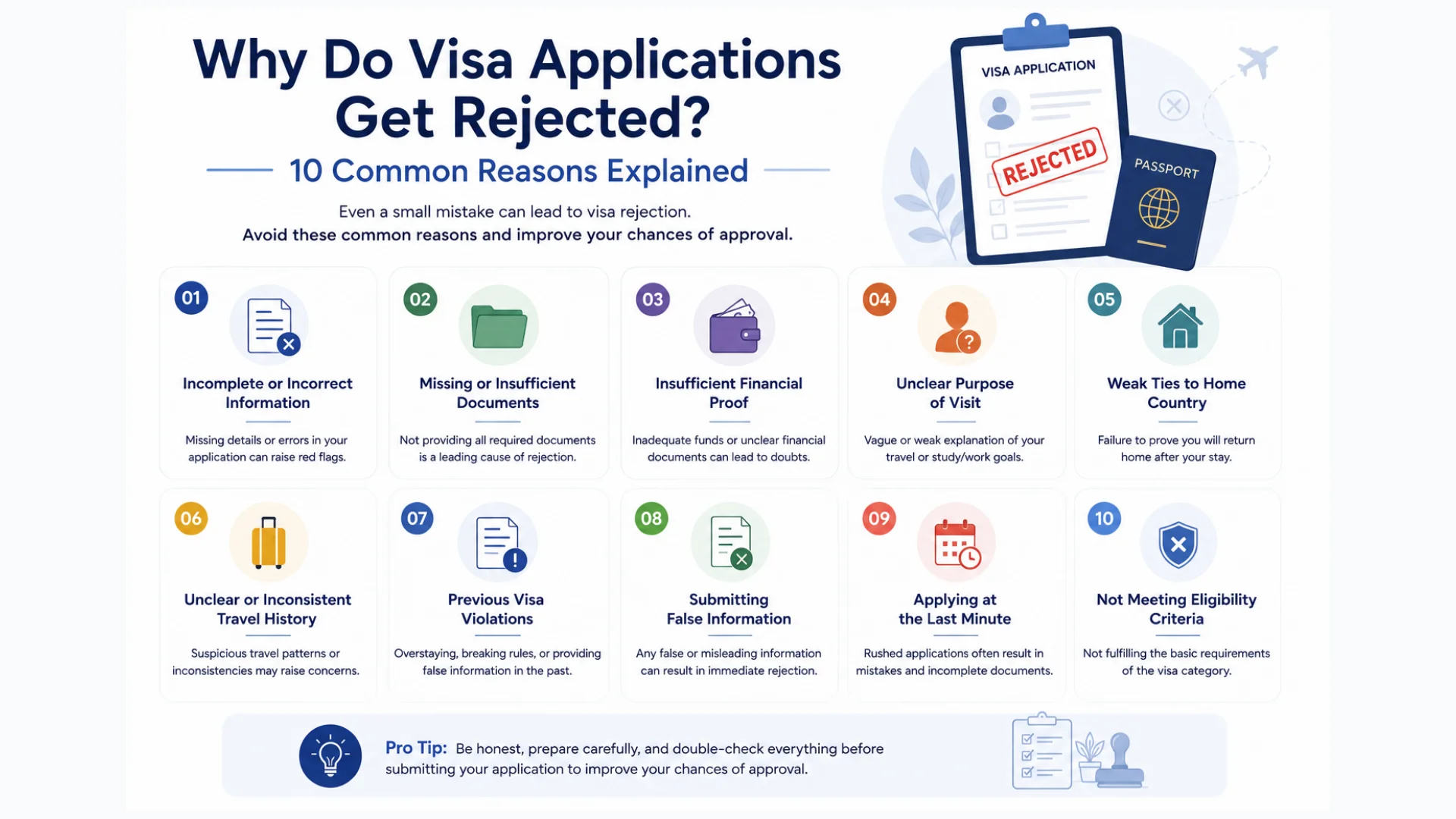
Getting a visa application rejected can be frustrating, especially when you’ve invested time, money, and hope into your study or career plans abroad. The good news is that most visa rejections happen for identifiable, avoidable reasons. Immigration officers review applications based on strict criteria, and even small oversights can lead to a denial. Understanding exactly why applications get rejected can help you prepare a stronger, more credible case the first time around. Below, we explain 10 of the most common reasons visa applications are rejected, so you know exactly what to watch out for before you submit yours.
1. Incomplete or Incorrect Documentation
One of the most common reasons for rejection is simply missing or incorrectly filled-out documents. This includes unsigned forms, missing pages, expired documents, or paperwork that doesn’t match the exact format required by the embassy or consulate. Even a small clerical error, like a mismatched name or date across different documents, can raise a red flag. Always cross-check your entire application against the official checklist before submission.
2. Insufficient Financial Proof
Visa officers need to see clear evidence that you can financially support yourself during your studies or employment abroad. Rejections often happen when bank statements are outdated, funds appear insufficient, or the source of money isn’t clearly traceable. Sudden large deposits without explanation can also raise suspicion. Make sure your financial documents are recent, consistent, and meet the exact threshold required for your specific visa category.
3. Weak Ties to Home Country
For many visa types, especially student and temporary work visas, officers want assurance that you intend to return home after your program or contract ends. If your application doesn’t demonstrate strong ties, such as family, property, or career prospects back home, it can be seen as a risk of overstaying. Clearly outlining your future plans and connections to your home country can help address this concern.
4. Inconsistent or Vague Personal Statements
A personal statement or statement of purpose that is generic, vague, or inconsistent with the rest of your application is a common red flag. If your stated goals don’t align with your chosen program, previous education, or career background, officers may doubt the genuineness of your application. Be specific, honest, and consistent about your intentions throughout every part of your application.
5. Failure to Meet Eligibility Criteria
Every visa category has specific eligibility requirements related to age, education, work experience, or language proficiency. Applying without carefully confirming you meet these criteria is a common and entirely avoidable mistake. Always verify the exact eligibility requirements for your specific visa type before applying, rather than assuming you qualify based on general research.
6. Incomplete or Failed Language Proficiency Requirements
Many student and skilled worker visas require proof of language proficiency through standardized tests. Rejections often occur when applicants submit outdated test scores, scores below the required threshold, or forget to include the results altogether. Double-check the minimum score requirements and validity period for your specific visa category well before applying.
7. Criminal Record or Background Check Issues
A criminal record, even a minor one, can lead to visa rejection depending on the country and severity of the offense. Failing to disclose past issues honestly, or submitting an outdated police clearance certificate, can also result in denial. Always provide accurate, up-to-date background documentation and be transparent about any past legal issues when required.
8. Health or Medical Examination Failures
Some visas require a medical examination to ensure applicants don’t pose a public health risk. Rejections can happen if required vaccinations are missing, medical reports are incomplete, or a health condition doesn’t meet the host country’s entry requirements. Schedule your medical exam early with an approved physician and ensure all required documentation is properly submitted.
9. Previous Immigration Violations
If you have a history of visa violations, such as overstaying a previous visa, working without authorization, or being deported from any country, this can significantly impact future applications. Immigration authorities often review your travel and visa history closely, so any past violations should be addressed transparently, with supporting documentation explaining the circumstances if possible.
10. Poor Interview Performance
For visa categories that require an interview, giving vague, inconsistent, or unconvincing answers can lead to rejection, even if your paperwork is in order. Officers are trained to assess the credibility of your intentions through your responses. Preparing thoroughly, reviewing your entire application beforehand, and practicing clear, honest answers can make a significant difference in how your interview is perceived.
How The Pathfinder Visa Can Help
Avoiding these common rejection reasons requires attention to detail, up-to-date knowledge of ever-changing visa requirements, and an understanding of exactly what immigration officers are looking for. This is where The Pathfinder Visa becomes an invaluable partner in your journey. Our experienced visa consultants review every part of your application, from documentation and financial proof to personal statements and interview preparation, ensuring nothing is overlooked. We stay current with the latest embassy and consulate guidelines across multiple countries, so you get accurate, reliable advice instead of outdated information. If you’ve faced a previous rejection, our team can help identify exactly what went wrong and build a stronger, corrected application for your next attempt. With The Pathfinder Visa by your side, you get personalized, expert guidance at every step, significantly increasing your chances of approval and helping you move forward with your study or career plans abroad with confidence. Contact us today to get started.